What Is an IMEI? A Practical Guide for Device Buyers
An IMEI is a mobile equipment identifier. It helps distinguish a device on a mobile network, but an identifier alone does not establish ownership, product condition, warranty eligibility or the reliability of a seller.
Understand the structure
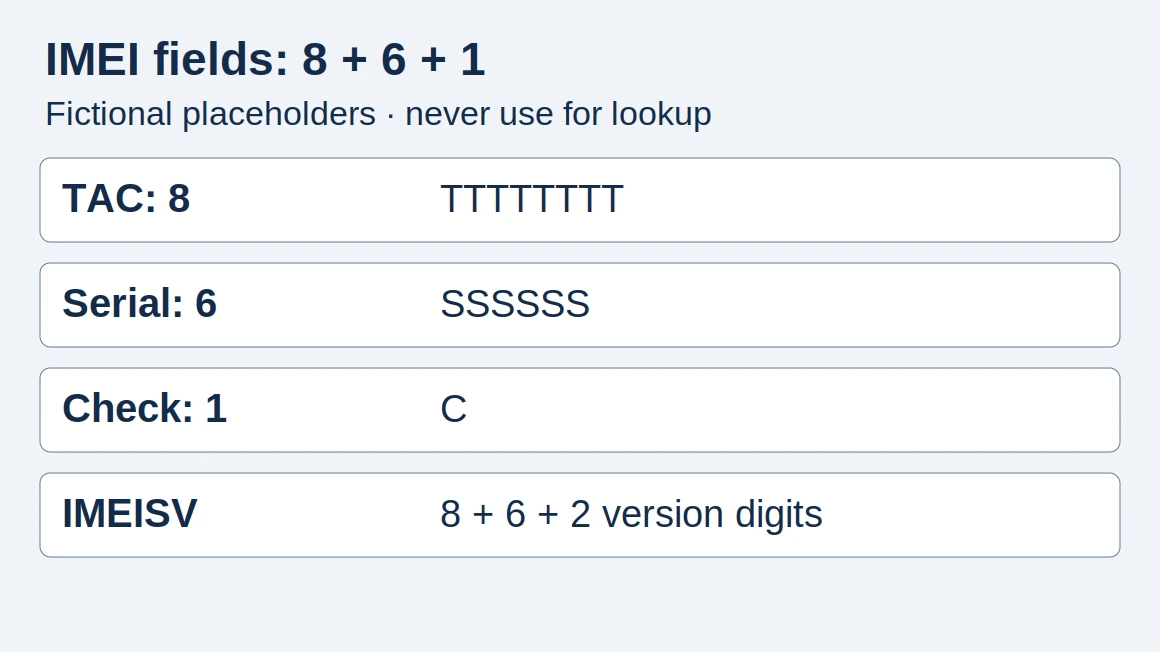
GSMA TS.06 v28.1 §5.1 describes the displayed IMEI as 15 digits: an eight-digit Type Allocation Code (TAC), a six-digit serial portion and a check digit. The TAC identifies an equipment type. Section 5.2 and Annex C.3 describe IMEISV as the first 14 IMEI digits plus two software-version digits, rather than the IMEI check digit.
Fictional structure only: TTTTTTTT | SSSSSS | C = 8 + 6 + 1 positions. These letters are not a valid identifier or a device-check example. Takeaway: Record which identifier format you actually read.
Use it as one part of a record
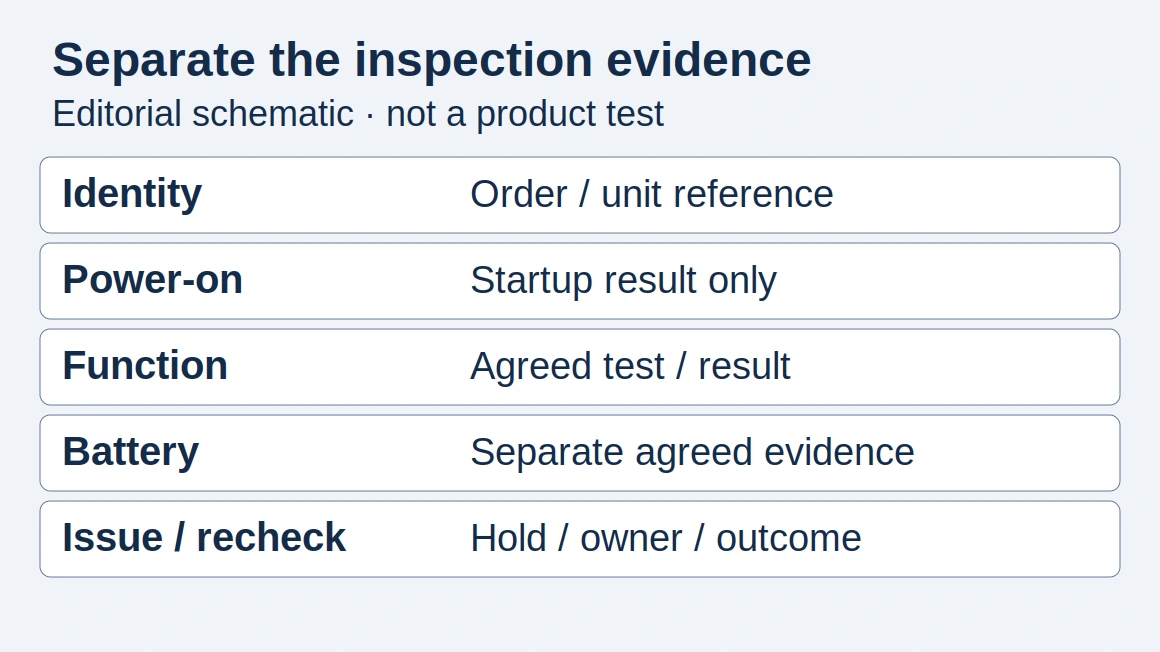
For receiving an order, retain the relevant displayed identifiers without assuming that SIM-slot count predicts their number. Copy this editorial record into controlled storage; it is not an invitation to upload customer identifiers:
Order/carton/unit reference: ___; model/variant: ___
Identifier type(s): ___; full value(s): restricted local record only
Public example: TTTTTTTT | ****** | * (fictional, masked)
Display/label mismatch and condition: ___
Check source/result/date: ___; inspector: ___
Restricted evidence location: ___; discrepancy owner/next action: ___
Takeaway: Connect the unit to its invoice and inspection evidence without publishing its complete identifier.
What an IMEI does not prove
Scroll horizontally to see all columns if needed.
| Claim | Additional evidence needed |
|---|---|
| The device is factory sealed | Packaging history and agreed inspection criteria |
| The seller owns the stock | Seller identity and transaction documentation |
| The phone has never been used | Condition evidence and relevant manufacturer checks |
| Warranty is available locally | Applicable warranty terms |
| It will work on my carrier | Exact model and carrier compatibility |
A result from a check performed today should be recorded with its source and date. Do not turn a single database response into a guarantee about every future network or account status.
Common mistake: Treating an identifier match as an ownership or condition certificate.
Handle identifiers carefully
Keep complete batch lists in controlled order records. For public examples, redact the identifying portion or use a clearly labeled fictional example. Do not enter customer identifiers into unfamiliar checking services merely because they appear in a search result.
Takeaway: Public reports need redacted evidence, not full batch lists.
Next checks
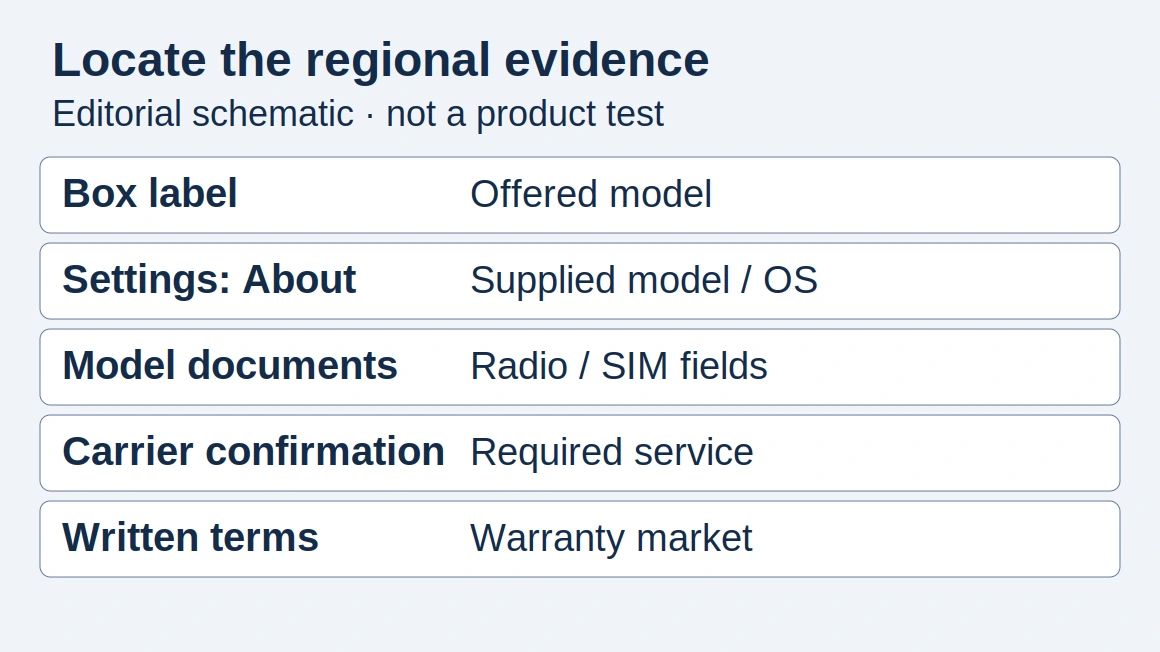
Use the quality-control workflow to combine identifier reconciliation with model, quantity and functional inspection. The global-version guide explains why regional compatibility still needs its own evidence.
How this guide was prepared
Desk research using the linked primary sources, with AI assistance. Purchasing workflows and numerical examples are editorial illustrations, not product tests or supplier inspections.
Sources and further reading
Found an error? See our corrections policy and research methodology.